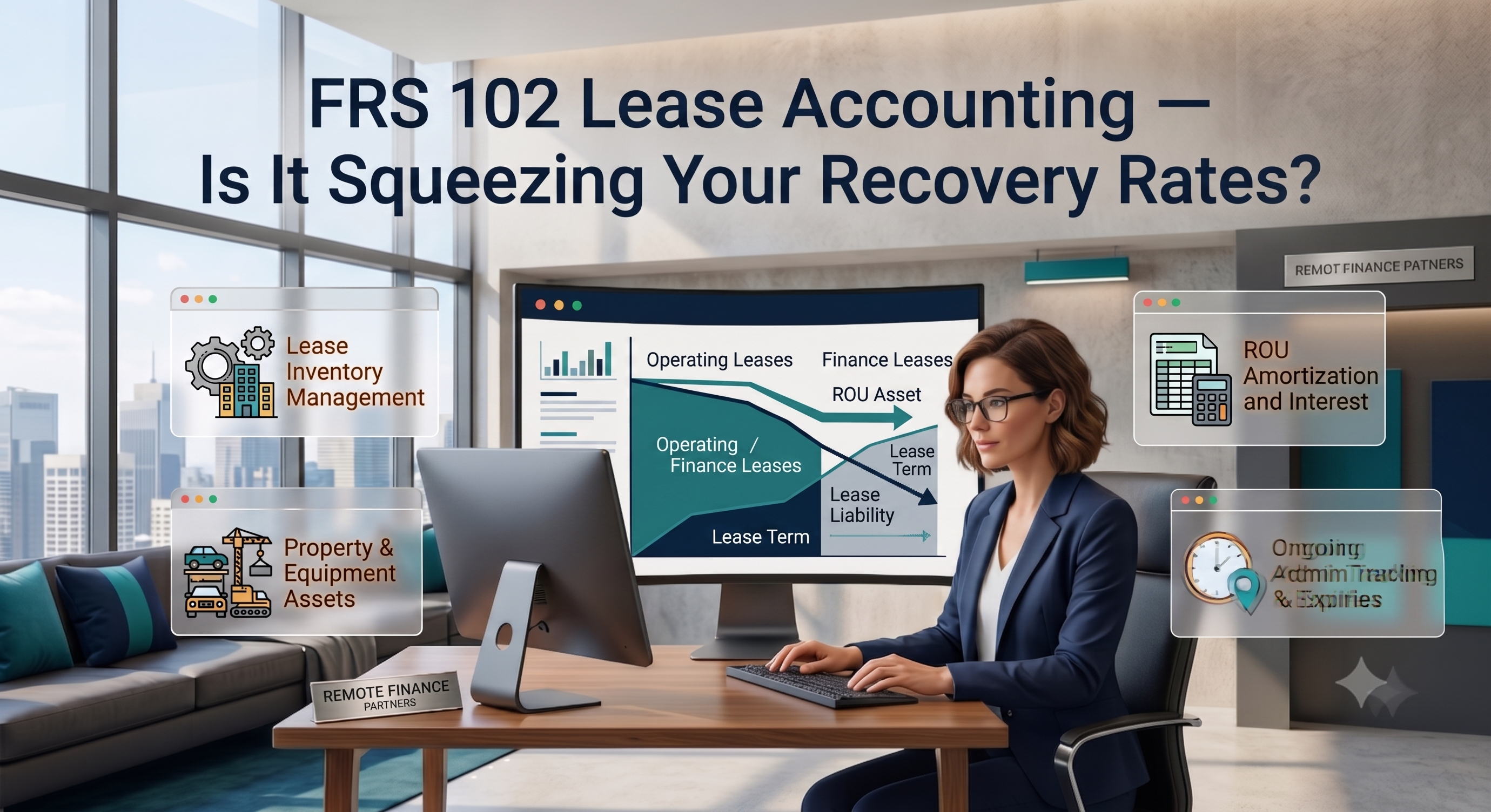
The new rules apply to accounting periods beginning on or after 1 January 2026 — so depending on your clients' year-ends, many won't hit the changes until their 2026/27 period. But for clients with multiple leases across property, vehicles and equipment, the admin pressure is already building.
The change itself is straightforward in principle: the old operating/finance lease distinction is abolished. Almost every lease now requires a right-of-use asset on the balance sheet, a corresponding lease liability, and an amortisation schedule maintained throughout the lease term. If you want the full technical detail, ACCA's guidance and Alliotts' overview set it out clearly. What we want to focus on here is what it means for your workload.
The Practical Problem
For a client with one or two simple leases, this is manageable. For a client with a mixed portfolio — say, a commercial property, three company vehicles and some equipment on hire — you are looking at multiple inventories to maintain, multiple schedules to update, and multiple events to track across the year. Rent reviews, break clauses, renewal decisions, lease modifications: each one needs to be picked up, assessed and reflected in the numbers.
If lease data is scattered across client files and nobody owns the tracking, the new rules will create errors — quietly and consistently.
What Good Lease Admin Looks Like Under the New Rules
- A current inventory of every lease the client holds — property, vehicles, equipment — with key terms captured in one place
- Start dates, end dates, payment amounts, review dates and break clauses logged and accessible
- Upcoming events flagged in advance: expiries, rent reviews, renewal decisions — nothing missed mid-period
- Amortisation schedules maintained and updated whenever lease terms change
- Changes surfaced to the fee earner for sign-off before anything is posted
- A clean, review-ready summary — so the compliance work gets done without back-and-forth
Where We Come In
This is admin that no fee earner should be doing every month. At Remote Finance Partners, we work with local 1–5 partner firms to take exactly this off the plate. We handle the data-gathering, organisation and ongoing tracking. You make the judgements, review the output and sign it off.
Not sure outsourcing is right for you? Even if it isn't, we're happy to walk you through our Reprice, Rescope and Resystemise model on a no-obligation call — use the time however is most useful to you.