The FRS 102 amendments apply to accounting periods beginning on or after 1 January 2026 — so depending on your clients' year-ends, many won't hit the new rules until their 2026/27 period. But the admin burden is already here.
The change that is catching practices out is revenue recognition. The new rules are stricter about when revenue can actually be recorded — it has to be tied to evidenced delivery of each distinct service in a contract, not simply when you raise an invoice. If you want the full technical detail, ACCA's guidance sets it out clearly. What we want to focus on here is what it means for your bookkeeping and your recovery rates.
The Practical Problem
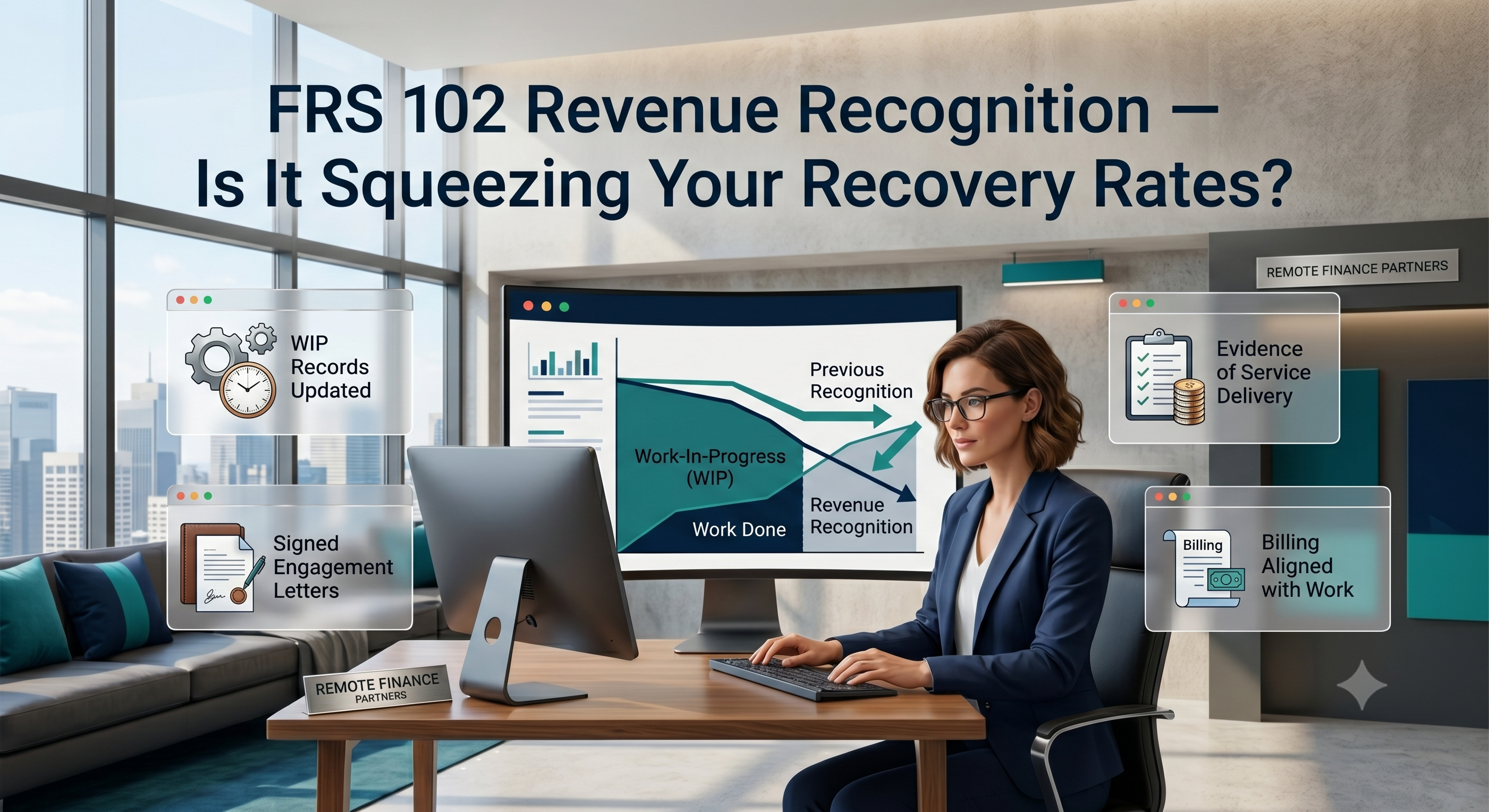
Work done no longer automatically equals revenue recognised. Until delivery is properly evidenced, it sits as work-in-progress. That means tighter rules around your WIP, your engagement letters, and how you document and bill completed work — all of which puts pressure on recovery rates if your bookkeeping isn't keeping pace.
If your WIP records, engagement letters, and billing aren't staying aligned, the new rules will cost you — quietly and consistently.
What Good Bookkeeping Looks Like Under the New Rules
- WIP records kept up to date at all times, not just at billing or year-end
- Engagement letters tracked, signed and filed — these are your contract evidence
- Billing coordinated with work done, with someone responsible for making sure the two stay aligned
- Delivery of each distinct service evidenced and documented before revenue is recognised
- Revenue recognition policies written down and consistently applied, ready for internal review or external audit
Where We Come In
At Remote Finance Partners, we work with local 1–5 partner firms to systemise exactly this kind of practice admin. Consistent data entry, structured WIP tracking, chasing signed engagement letters, keeping records clean — so you can make the right judgement calls without the admin falling through the cracks.
Not sure outsourcing is right for you? Even if it isn't, we're happy to walk you through our Reprice, Rescope and Resystemise model on a no-obligation call — use the time however is most useful to you.